Every department has a different idea.
Teams test different tools, but the company has no shared criteria and no single list of priorities.
Someone finally runs AI in your company
Together with your board we pick the initiatives that make sense, drive them to working solutions and measure the effect. You get one person accountable for the whole area, and a team that delivers rather than only recommends.
No sales deck. We talk about one area that is stuck today and tell you plainly whether we can help.
When you need one
Teams test different tools, but the company has no shared criteria and no single list of priorities.
Business, IT and vendors wait for each other because nobody owns agreeing and doing the next step.
Costs, risks and expected gains are judged separately. It is hard to decide what to grow and what to stop.
How we work
We repeat the cycle, updating priorities as the company’s needs change and as we learn its processes.
01
We talk to the board and to the people who own the processes. We collect running tests, needs and ideas, and agree a shared starting point.
What you get: A priority list, named owners, metrics and agreed next steps.
02
We refine the scope of the chosen work, bring in the specialists needed and coordinate the work on both sides.
What you get: Visible progress, clearly named obstacles and the list of decisions that unblock further work.
03
We sum up effects, risks and lessons. The board gets a recommendation and the priority list is updated for the next period.
What you get: A documented decision and a plan for further work with a clear split of responsibility.
This is not a one-off project. With every cycle we know the company’s processes better and can make sharper decisions. Larger integrations, ground-up software, formal audits and ongoing maintenance require a separate scope.
What we deliver
A list of initiatives with cost, risk, metric and recommendation. The board gets a basis for a decision, not a presentation about AI.
Concretely: a monthly summary, a decision and risk register, and the rationale for buying or building.
An automation, integration, prototype, configuration or pilot, launched and tested in your company within the team’s monthly pool of hours.
Concretely: at a law firm this was daily automatic report retrieval without a standard integration, plus monitoring that chases missing entries by itself.
A short manual, a named process owner and a way to measure. The solution has to work when we are not there.
Concretely: working documentation, a trained owner on your side, an agreed metric and the threshold that calls for action.
Case study
We describe the starting point, the change we made and the measurable effect, with no shortcuts and no invented examples.
Monitoring detects scope overruns, extra work to be billed and clients who need contact or closer attention.
Key result
Regular reporting gaps cut by over 80% after a simple automation supervised by dyrektor.ai.
Terms
You are not buying meetings or advisor hours. You are buying the team’s availability, the lead person and the specialists, which we spend where it creates the most value that month.
Priced separately, before we start: dedicated systems and websites · large integrations, migrations and ongoing maintenance · penetration tests and formal audits · extended legal support and high-risk AI systems · guaranteed response times and 24/7 availability.
Tools, licences and infrastructure are paid by the company.
People and standard
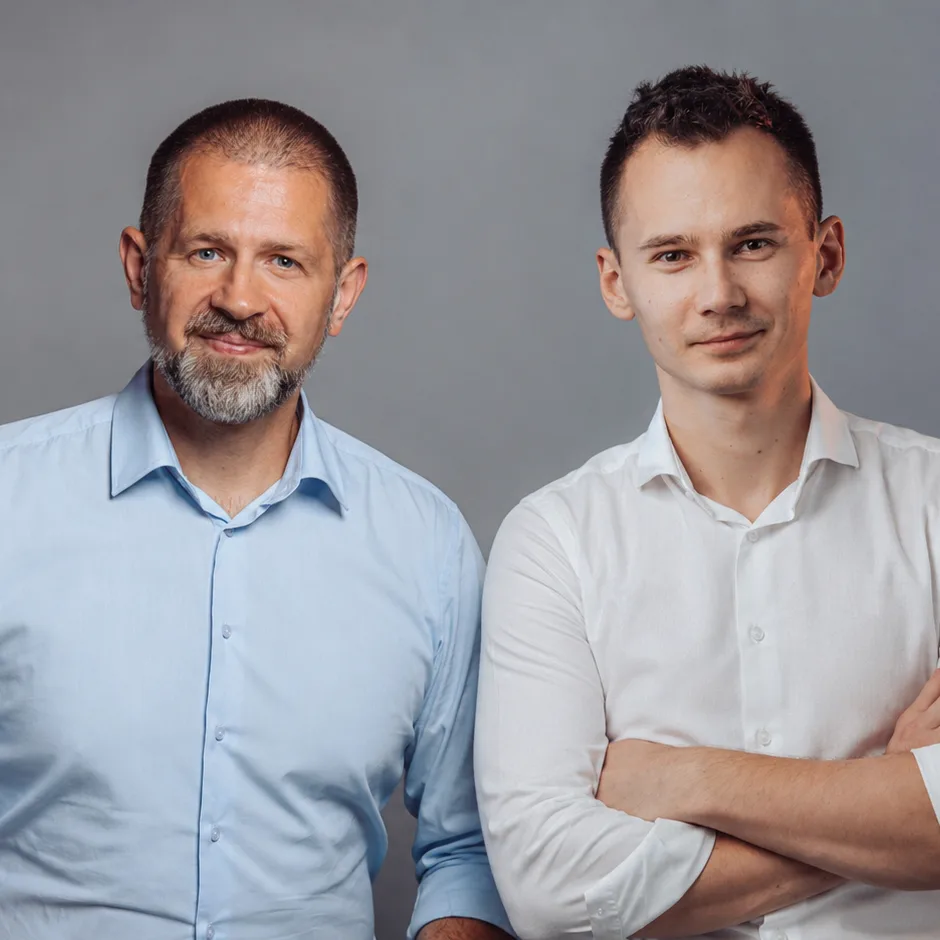
Rafał and Michał created dyrektor.ai and develop the standard of the service. The engagement does not depend on one person being available: everyone works to the same method and draws on the right specialists.

He combines the perspective of an entrepreneur, an adviser and a practitioner. At dyrektor.ai he is responsible for contact with the board, priorities and running the engagement. He is the person a company comes to with a problem and holds to account for the result.
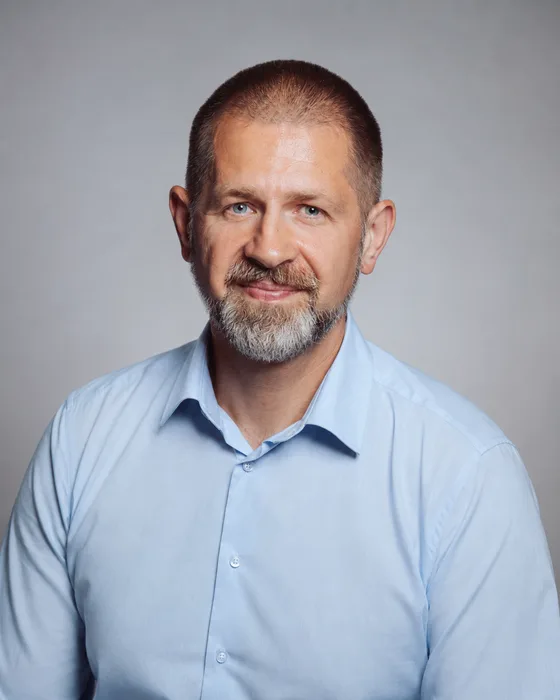
Michał has led technology teams and projects for over 20 years, from content management and television playout systems to Conversational AI and LLMs. At dyrektor.ai he is responsible for feasibility, architecture, measurement and the move from a decision to a working pilot.
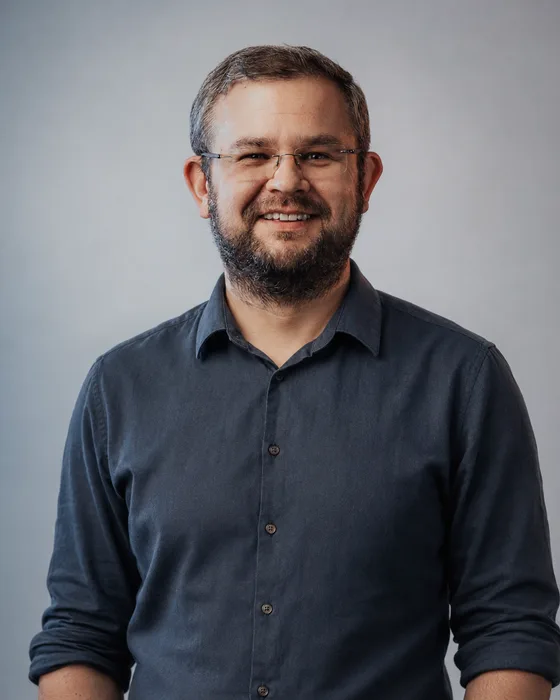
Patryk has built software for over 20 years. Since 2019 he has been co-founder and CTO of utter.one, where he builds voice systems, chatbots and generative AI solutions, including the open-source Bonsai platform. At dyrektor.ai he is responsible for feasibility, architecture and measurement of proposed solutions.
Who it is for
Key questions
We bill a monthly subscription covering an agreed pool of hours from the lead person and the team of specialists. The amount depends on the capacity we agree, which we set after the first call, once we know the scale of work your situation needs. Hours beyond the pool are billed only after your prior approval. Tools, licences and infrastructure are paid by the company.
We need one person named by the board with time reserved for a regular meeting and for making decisions, plus access to the people who know the chosen process, usually a few short conversations a month. Without that access the work slows down regardless of our capacity.
The first three months are the minimum term. That is the time needed for one full cycle: getting to know the company, measuring the baseline and launching the first solution. After that the engagement runs on an open-ended basis, for as long as it creates value for the company.
One named lead person accountable for priorities, communication and the result, plus a standing core team covering AI, automation and implementation. Additional specialists are chosen per task. You have one point of contact, not several vendors to manage.
We start with basic access hygiene and a Shadow AI audit, checking which AI tools employees already use and what risk that creates. We keep a register of AI systems in use, name the risks and prepare standard documents, including an AI usage policy. Penetration tests, formal audits and high-risk AI systems require a separate scope.
We are responsible for running the work, preparing recommendations, naming risks and bringing in the specialists needed. Business, legal and operational decisions stay with the company.
First step
We start with a 30-minute call with the owner, a board member or the person responsible for the area. No sales deck: we want to understand the situation and tell you plainly whether we can help.